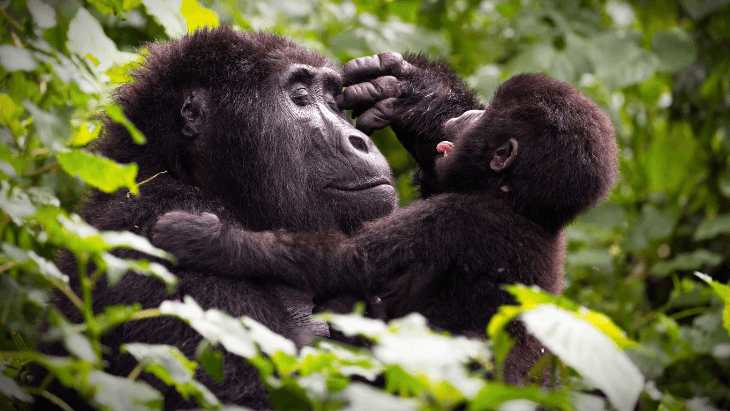
Bwindi Impenetrable National Park, located in southwestern Uganda, is a UNESCO World Heritage Site renowned for its rich biodiversity and as a sanctuary for the endangered mountain gorillas. Spanning 331 km², the park is characterized by its rugged terrain, dense forests, and diverse ecosystems, making it a premier destination for nature enthusiasts and adventure seekers.
Gorilla Trekking
Bwindi is one of the few places in the world where visitors can observe mountain gorillas in their natural habitat. The park is divided into four sectors—Buhoma, Nkuringo, Rushaga, and Ruhija—each offering unique trekking experiences. Trekking involves a hike through the dense forest to locate a gorilla family, followed by a one-hour observation period. Permits are required and should be booked in advance due to high demand.
Gorilla Habituation Experience
For a more immersive experience, the Gorilla Habituation Experience allows visitors to spend up to four hours with a gorilla family. This activity provides a deeper understanding of gorilla behaviour and conservation efforts, as participants join researchers in habituating wild gorillas to human presence.
Bird Watching
Bwindi is a haven for bird enthusiasts, boasting over 350 bird species, including 23 Albertine Rift endemics such as the Short-tailed Warbler and Blue-headed Sunbird. Birding can be enjoyed along various trails, including the Buhoma Waterfall Trail and the Mubwindi Swamp Trail in Ruhija.
Nature Walks and Hiking
The park offers several nature trails for visitors to explore its diverse ecosystems. Popular trails include the Buhoma Waterfall Trail and the Mubwindi Swamp Trail, each providing unique opportunities to observe the park’s flora and fauna.
Cultural Experiences
Engage with the local communities surrounding Bwindi, such as the Batwa and Bakiga tribes, to learn about their traditional lifestyles and cultures. Activities include village walks, traditional dance performances, and visits to local artisans.
REQUIREMENTS FOR GORILLA TRACKING
Age Limit
- Minimum age for gorilla tracking is 15 years.
- This is due to the strenuous nature of the hike and the potential to carry communicable diseases to gorillas
- Physical Fitness
- The trek can be demanding, involving hiking through thick forest and rugged terrain for 2 to 6 hours (sometimes more).
- Moderate to good fitness is recommended. Porters are available to help with bags or even to assist with the hike if needed.
- Health Requirements
- Do NOT track if sick (especially with flu, cough, or diarrhea). Gorillas are highly susceptible to human diseases.
- If you’re visibly ill, park authorities may deny you access without refund Gear Checklist
- Hiking boots (sturdy and waterproof)
- Rain jacket (Bwindi is a rainforest)
- Long trousers and long-sleeved shirt (for protection from thorns and insects)
- Gardening gloves (helpful while grabbing vegetation)
- Insect repellent
- Drinking water (at least 2 litres)
- Snacks or packed lunch (especially for longer treks)
- Camera (without flash)
- Gorilla Trekking Rules
- Maintain a distance of at least 7 meters (21 feet) from the gorillas.
- No flash photography.
- Speak in a low voice.
- Stay in a tight group while with gorillas.
- Do not eat or drink in front of the gorillas.
- No smoking or littering inside the park
Booking
Gorilla tracking permits should be booked in advance at least 3 to 6 months before. This is because of the high demand for Gorilla permits
- Timing
- Treks start early in the morning (around 7:30–8:00 AM), following a briefing at the park headquarters.
- Be prepared for early wake-up and transport to the briefing center (especially in Rushaga, Buhoma, Nkuringo, or Ruhija sectors).